Magazine Forum steep-slope: Review with Outlook
What it takes to make steep-slope viticulture profitable in the future: The magazine summarizes the key insights from the 1st Forum steep-slope in the Wachau – available now!
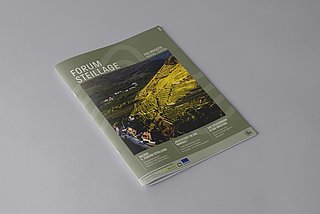
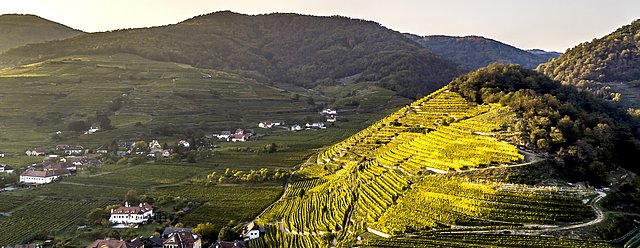
On March 27, 2025, the Wachau hosted the 1st Forum steep-slope, a new discussion platform for steep-slope viticulture in the German-speaking world. Among the participants were industry insiders such as Willi Klinger, winemaker Tamara Kögl from Southern Styria, Prof. Randolf Kauer from Geisenheim University, and hydroclimatologist Klaus Haslinger. As part of the German-speaking steep-slope network, the event attracted numerous guests from partner regions in Germany and Luxembourg. The magazine offers a concise summary of the key takeaways as well as additional in-depth insights.
Thematic Focus 1 revolved around the question: Who will make the wine in the future? The effort required is enormous, as production costs in steep-slope vineyards, which can only be worked by hand, are far higher than on flat terrain. The forum’s conclusion:
It takes dedicated, innovative winemakers and a strong network: viribus unitis – with united forces.
Thematic Focus 2 addressed the question: Who will drink the wine in the future? The global trend is clear: overall wine consumption is declining. This macro-level trend cannot be changed. To reach new target groups, new sales channels must be opened up, and strong brands must be built – at the winery, regional, and national levels. In summary, this means:
Prices must rise to justify the effort – and this can only be achieved through quality and brand awareness.
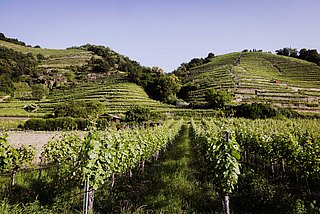
Thematic Focus 3 explored the question of where wine will grow in the future. Climate change is drastically altering conditions in some areas: more hot days, heavy rainfall, and periods of drought can place significant strain on steep-slope vineyards. Precipitation patterns are becoming more variable, and extreme events are on the rise. Soil management is becoming even more critical to ensure better water retention. This means:
Choosing suitable vineyard sites is becoming more challenging – perhaps even in areas that are still cooler today.
Prof. Randolf Kauer from Geisenheim University advocated redefining steep-slope viticulture and having a precise understanding of its costs.
Randolf Kauer clearly illustrated the increased production costs – in hand-worked steep-slope vineyards, they can be up to 2.5 times higher compared to fully mechanizable areas. The reasons: limited mechanization options and high labor costs. Kauer therefore advocates defining steep-slope viticulture not solely by slope inclination, but also by the degree to which mechanization is possible.
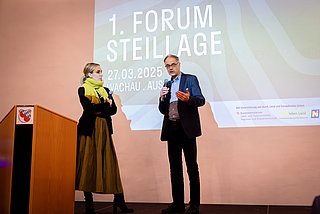
Wine expert Willi Klinger: "Invest in the brand!"
For wine expert Willi Klinger, the brand is the key to creating demand for expensive wines. “Top-quality wines from steep-slope regions must cost at least €150 net for viticulture to remain profitable in the future. That must be the goal.” Klinger views brand development as a multi-level project: investments are needed not only in the winery’s brand but also in the regional origin brand—the wine-growing area itself. As a third level, he sees the wine-producing country as an umbrella brand through generic marketing.
“The consumer is the boss,” it is often said, but Klinger quotes Apple founder Steve Jobs, who said, “Customers don’t know what they want until we’ve shown them.” This means that every day, we must actively promote the added value of characterful steep-slope wines and create demand for them.”
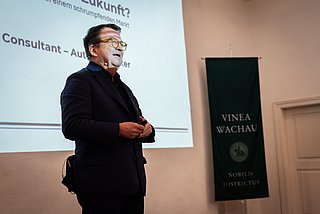
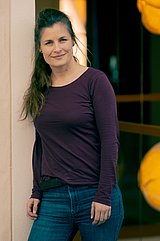
Talking About Value(s): Interview with Winemakers Hanna Hirtzberger and Tamara Kögl
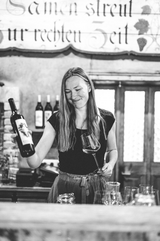
For the magazine, we also conducted exclusive interviews after the 1st Forum Steillage with Wachau winemaker Hanna Hirtzberger and her Styrian colleague Tamara Kögl. Both are convinced that the topic of steep-slope viticulture needs to be communicated more strongly at the level of wine-growing regions. “We need to address the value of steep-slope sites and how to communicate it within winegrowers’ associations. And we must better leverage the synergies between tourism and the wine industry. Here, we can support each other,” says Tamara Kögl.
This requires the right wording and visual language that clearly conveys the message to consumers. The craftsmanship aspect must play an important role, according to Hanna Hirtzberger: “It is important to us to show our guests how artisanal our approach is. It’s fair to say that what we do is of very high quality—we carefully consider every step. We aim to work with great craftsmanship. This sets us apart from large-scale industrial production—and that has value. This applies not only to our winery but generally to the Wachau, which is very small-structured.”
The full interview can be found in the Forum steep-slope magazine.
Order Forum steep-slope Magazine
More information can be found in the Forum steep-slope magazine. You can download it here or order your free print copy from Vinea Wachau at: office@vinea-wachau.at
In 2026, the Forum steep-slope will continue in the Middle Rhine Valley and Rheingau, and in 2027 in Luxembourg.